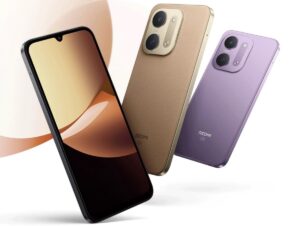
Google Pixel 11 Review: A Smarter Pixel With a Strong Camera and Tensor G6

The Google Pixel 11 is the latest standard Pixel flagship, combining Google’s clean Android experience with a new Tensor G6 processor, an upgraded camera system, a brighter 6.3-inch OLED display and a larger battery.
Rather than trying to compete solely through raw specifications, Google continues to focus on photography, artificial intelligence, software features and long-term security updates. The result is a smartphone designed to deliver a polished everyday experience while putting Google’s AI capabilities at the centre of the device.
Design and Build Quality
The Pixel 11 keeps Google’s distinctive Pixel design while refining the overall hardware.
The phone measures 152.8 x 72 x 8.6mm and weighs 197 grams. It features a recycled aluminium frame, Gorilla Glass Victus 2 on the front and back, and an IP68 rating for dust and water resistance.
Google offers the Pixel 11 in four colours: Frost, Pistachio, Hibiscus and Obsidian.
The relatively compact dimensions make the Pixel 11 easier to handle than many large-screen flagship smartphones. At the same time, the 6.3-inch display provides enough space for browsing, watching videos and using productivity applications.
6.3-inch Actua OLED Display
The Pixel 11 features a 6.3-inch Actua OLED display with a resolution of 1080 x 2424 pixels and a pixel density of 422ppi.
The panel supports Google’s Smooth Display technology with refresh rates between 60Hz and 120Hz, providing smoother scrolling and animations when compared with conventional 60Hz displays.
Brightness has also received considerable attention. Google rates the screen for up to 2,000 nits in HDR and 3,000 nits of peak brightness, which should make the phone easier to view outdoors.
HDR support and a contrast ratio above 2,000,000:1 further contribute to the display’s multimedia capabilities.
For everyday use, the combination of OLED technology, high brightness and a 120Hz refresh rate makes the Pixel 11’s display one of its key features.
Tensor G6 Performance
At the heart of the Pixel 11 is Google’s new Tensor G6 processor.
The chip is paired with 12GB of RAM, while storage options include 256GB and 512GB. The 512GB version also uses Zoned UFS storage for faster performance.
The Pixel 11 is designed around Google’s approach to smartphone performance, where AI processing is just as important as conventional CPU and GPU performance.
Apps open quickly, multitasking is smooth and everyday tasks such as browsing, messaging, photography and video playback are handled without difficulty.
The Tensor platform also powers many of Google’s on-device AI features, making the processor particularly important for functions involving photography, voice recognition, translation and Gemini.
Triple Camera System
Photography remains one of the Pixel 11’s biggest strengths.
The phone features a triple rear-camera system consisting of:
- 48MP wide camera
- 13MP ultrawide camera
- 10.8MP telephoto camera
- 5x optical zoom
- Up to 30x Super Zoom
The main 48MP camera has an f/1.70 aperture and a 1/1.56-inch sensor, while the telephoto camera includes optical image stabilisation.
Google also includes Macro Focus, Night Sight, Portrait Mode, Astrophotography, Long Exposure and other computational photography features.
The combination of Google’s image-processing algorithms and the new camera hardware gives the Pixel 11 a versatile setup for everyday photography.
Zoom and Telephoto Performance
The inclusion of a dedicated 5x telephoto camera gives the standard Pixel 11 more flexibility when photographing distant subjects.
The phone can provide optical-quality results at several zoom levels, including 0.6x, 1x, 2x, 5x and 10x, while Super Zoom extends the maximum range to 30x.
This makes the Pixel 11 suitable for everything from landscapes and portraits to distant subjects.
As with most smartphones, however, image quality naturally decreases as digital zoom moves beyond the range supported by the optical hardware.
Selfie Camera and Video
The front camera is a 10.5MP Dual PD autofocus camera with a 95-degree ultrawide field of view.
It supports 4K video recording at up to 60fps, while the rear cameras can also record 4K video at 24, 30 and 60fps.
Google includes features such as 10-bit HDR video, Audio Magic Eraser, Macro Focus Video, Cinematic Pan and several stabilisation modes.
Slow-motion recording is also supported at up to 240fps.
For creators, the combination of 4K recording, stabilisation and Google’s computational video features makes the Pixel 11 a capable mobile video platform.
Battery Life
Google has equipped the Pixel 11 with a 4,985mAh typical battery, with a minimum capacity of 4,840mAh.
The company rates the phone for more than 30 hours of battery life under its stated testing conditions.
Wired charging can reach 55% in approximately 30 minutes when using a 30W USB-C PPS charger or faster compatible charger.
The Pixel 11 also supports Pixelsnap wireless charging at up to 25W, using the Qi2.2-certified system.
Battery performance will naturally depend on factors such as display refresh rate, network connectivity, camera use and gaming, but the larger battery represents an important improvement for users who spend a lot of time away from a charger.
Gemini and AI Features
Artificial intelligence is central to the Pixel 11 experience.
The phone includes Gemini Intelligence, Gemini Nano and Gemini Live, alongside features such as Circle to Search, Live Translate and Call Assist.
AI also plays an important role in photography and editing. Features include Magic Eraser, Best Take, Photo Unblur, Zoom Enhance, Portrait Light and editing capabilities integrated with Google Photos.
Google has also introduced features such as Camera Coach and Magic Capture, giving the camera application a more intelligent and assistive approach.
Android 17
The Pixel 11 launches with Android 17, giving users Google’s latest version of Android directly from the company that develops the operating system.
The software experience remains one of the Pixel family’s defining characteristics. The interface is clean and closely integrated with Google’s services, while Pixel-exclusive features provide additional functionality.
Google also promises seven years of OS, security and Pixel Drop updates, giving the phone an unusually long software-support period.
Security
Security is another major focus.
The Pixel 11 combines the Tensor G6 processor with Google’s Titan M3 security coprocessor and additional hardware security technologies.
The phone also includes anti-malware and anti-phishing protection, spam and scam protection in Google Phone and Messages, and a VPN from Google at no additional cost.
Fingerprint and face unlock are both available for authentication.
Connectivity
The Pixel 11 supports modern connectivity standards, including Wi-Fi 6E, Bluetooth 6, NFC and 5G.
The phone uses USB Type-C 3.2 and supports dual eSIM configurations, with network availability varying by market.
Google Pixel 11: Pros and Cons
Pros
- Bright 6.3-inch 120Hz OLED display
- Google Tensor G6 processor
- 12GB RAM
- Versatile triple-camera system
- Dedicated 5x telephoto camera
- Up to 30x Super Zoom
- Strong AI and Gemini integration
- 4,985mAh battery
- 25W Qi2.2 wireless charging
- IP68 water and dust resistance
- Seven years of software and security updates
Cons
- Wired charging remains relatively modest compared with some Chinese competitors
- Only 256GB and 512GB storage options
- The standard model does not offer the larger LTPO display found on higher-end Pixel models
- Some AI features may vary by region and language
Final Verdict
The Google Pixel 11 continues Google’s strategy of competing through software, photography and artificial intelligence rather than simply chasing the highest hardware numbers.
Its 6.3-inch 120Hz OLED display is bright and responsive, while the Tensor G6 provides the processing foundation for Google’s latest AI features.
The triple-camera system is another major highlight. A 48MP main sensor, 13MP ultrawide and dedicated 5x telephoto camera give the Pixel 11 a versatile photography setup, while Google’s computational photography tools add features that go well beyond basic camera hardware.
The larger 4,985mAh battery and 25W Qi2.2 wireless charging also improve the overall experience, while seven years of updates give the phone a long-term software advantage.
Overall, the Pixel 11 is a refined flagship smartphone focused on what Google does best: Android software, computational photography, AI features and long-term support. It is a particularly interesting option for users who want a compact premium phone with a strong camera system and Google’s latest AI-powered experience.